Efficient Kitchen Design: Keep Utensils Close to Where They’re Used

Efficient Kitchen Design: Keep Utensils Close to Where They’re Used
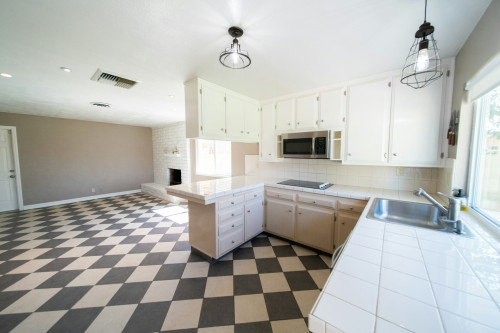
A well-designed kitchen is about more than just style – it’s about practicality. When utensils, cookware and ingredients are placed logically in relation to where they’re used, cooking becomes faster, easier and far more enjoyable. A thoughtful layout can save you countless steps and make everyday tasks flow naturally.
Think in Work Zones
A good starting point is to divide your kitchen into functional zones. Most kitchens can be organised into five main areas:
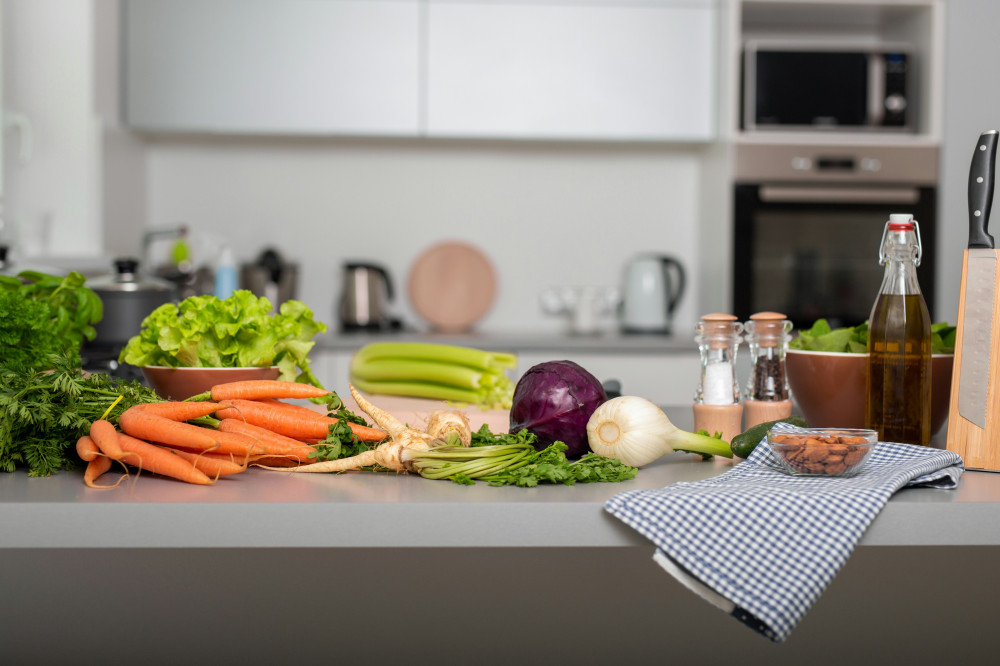
- Preparation zone – where you chop, slice and mix. Keep chopping boards, knives, bowls and seasonings close at hand.
- Cooking zone – around the hob and oven. Store pots, pans, wooden spoons and spices nearby.
- Washing zone – around the sink and dishwasher. This is where washing-up liquid, tea towels and waste bins belong.
- Storage zone – for dry goods, tins and the fridge. Place the items you use most often at eye level.
- Serving zone – where you plate up and serve meals. Keep plates, cutlery and serving dishes within easy reach.
By arranging your kitchen around these zones, you’ll avoid unnecessary back-and-forth and keep everything where you need it.
Læs også:

Keep Utensils Within Reach
One of the most common kitchen frustrations is having utensils scattered across drawers and cupboards. When you need a whisk, you shouldn’t have to search through three drawers to find it. Instead, group utensils by function and store them where they’re most often used.
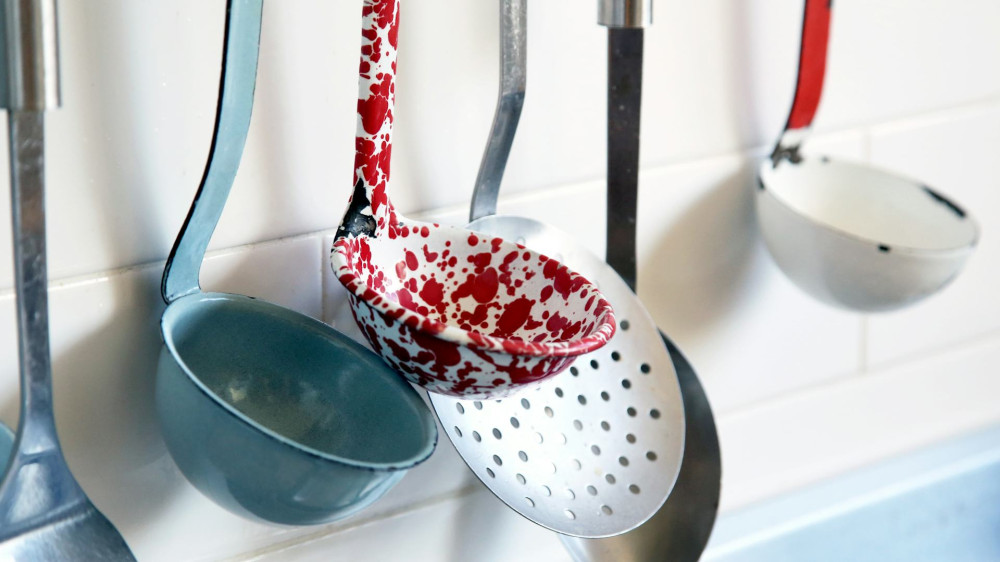
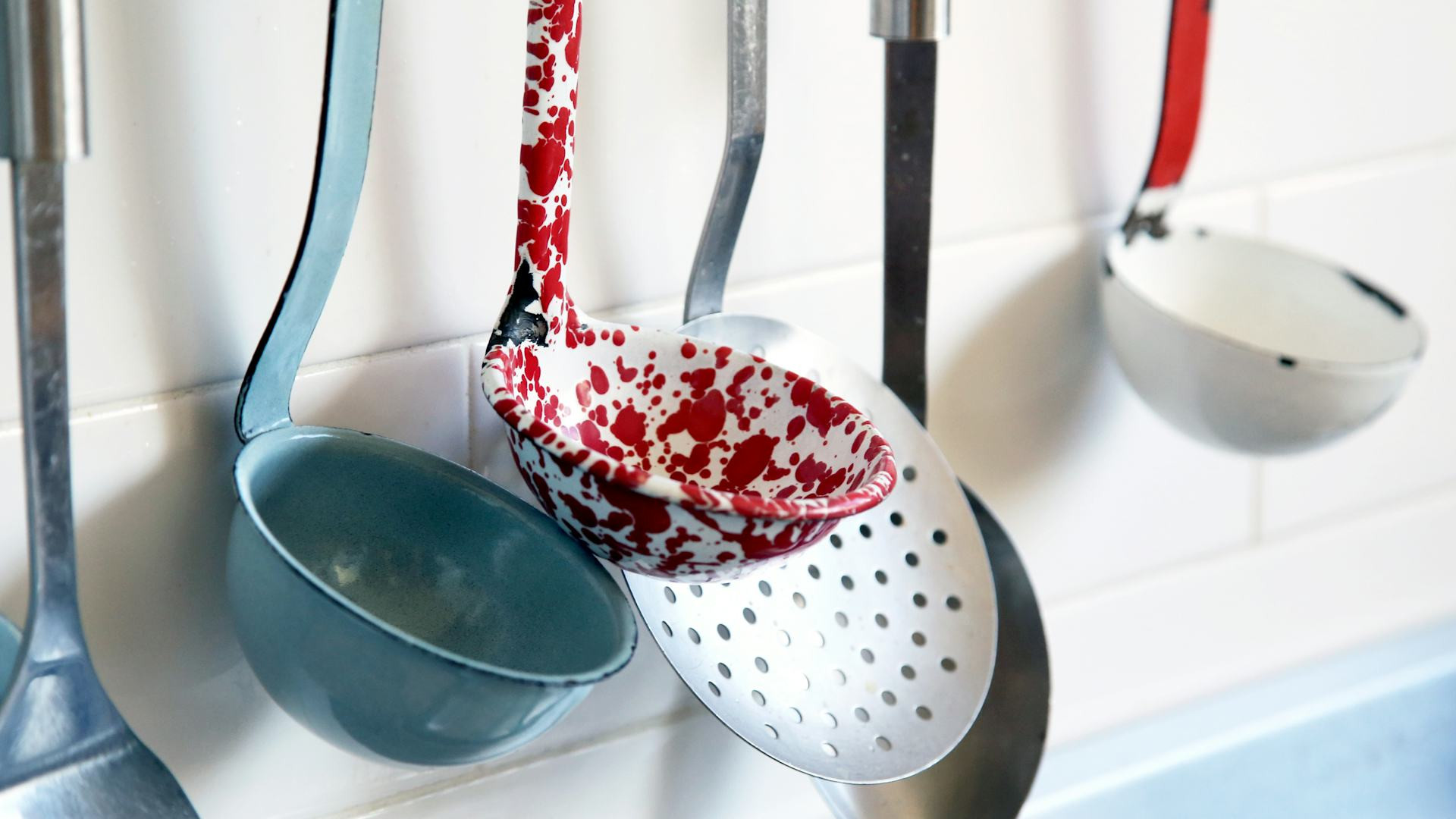
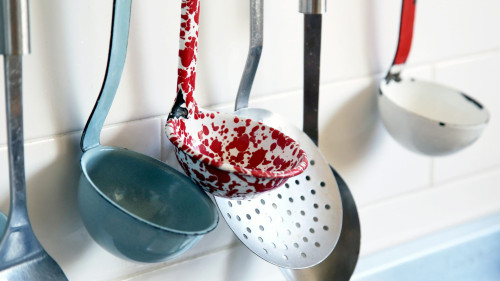
- Hang spoons, ladles and whisks on a rail near the hob.
- Keep knives in a block or on a magnetic strip close to your chopping area.
- Store baking tools such as measuring cups, spatulas and baking paper in a drawer near the oven.
Small adjustments like these can make a big difference to your daily routine.
Make the Most of Height and Depth
Many British kitchens are compact, so using every inch of space matters. Walls and deep cupboards often hold untapped potential:
- Fit pull-out shelves in deep cupboards so you can easily reach items at the back.
- Use hooks under wall units for mugs or small utensils.
- Store rarely used appliances on higher shelves, keeping everyday items within easy reach.
A well-organised kitchen feels larger and more manageable, even without adding extra space.
Create a Natural Flow
When cooking, you tend to move between the sink, worktop and hob – often referred to as the “working triangle”. The shorter and clearer the paths between these points, the more efficient your kitchen becomes.
If you’re planning a new kitchen, make sure this triangle isn’t interrupted by doors or tall units. In an existing kitchen, you can still improve flow by repositioning smaller items – for example, keeping the bin near the chopping board or storing spices beside the hob.
Make Tidying Up Easy
An efficient kitchen is also a tidy one. When everything has a designated place, it’s easier to keep order. Use containers, baskets and labels to create structure inside drawers and cupboards.
Think about how to make cleaning up quicker:
- Keep a small compost caddy or bin on the worktop while cooking.
- Position the dishwasher close to the sink for easy loading.
- Store tea towels and cleaning products within arm’s reach.
Simple, practical solutions like these mean you can spend more time cooking and less time searching for things.
A Kitchen That Works With You
When utensils and ingredients are kept close to where they’re used, your kitchen becomes an extension of your movements. You save time, reduce frustration and make cooking a more enjoyable part of your day.
Efficient kitchen design isn’t about having the biggest or most high-tech space – it’s about creating a kitchen that works with you, not against you.
Læs også: