Save Water in the Kitchen: How to Avoid Waste While Cooking and Cleaning

Save Water in the Kitchen: How to Avoid Waste While Cooking and Cleaning
The kitchen is one of the biggest water users in any home – from cooking and washing up to cleaning surfaces. Yet a surprising amount of that water goes straight down the drain without being used effectively. With a few simple changes to your habits and equipment, you can save many litres every day – good news for both the environment and your water bill. Here’s how to cut down on unnecessary water waste in your kitchen.
Know Your Water Use
The first step to saving water is understanding how much you actually use. A typical kitchen tap can release 10–15 litres per minute, so leaving it running while cooking or washing up quickly adds up.
Pay attention to when you let the water run for no reason – for example, when rinsing vegetables, waiting for hot water, or washing your hands. Small adjustments here can make a big difference.
Cook with Care
There are plenty of ways to save water while preparing meals:
- Use a lid on your pans. When boiling potatoes, pasta, or vegetables, a lid helps water heat faster and reduces evaporation, meaning you can use less water overall.
- Reuse cooking water. The water from boiled vegetables can be used as a base for soups or sauces – it’s full of flavour and nutrients.
- Defrost food in the fridge. Instead of thawing meat or fish under running water, move it from the freezer to the fridge in advance. It saves litres of water and is more hygienic.
- Rinse produce in a bowl. Fill a bowl with cold water instead of rinsing under the tap. You can then reuse the water to feed your houseplants.
Efficient Washing Up – With or Without a Dishwasher
Washing up is one of the biggest water drains in the kitchen, but smart habits can make a big difference.
- Fill your dishwasher completely. A modern dishwasher uses around 10–12 litres per cycle – far less than washing by hand under running water. Wait until it’s full before switching it on.
- Choose the eco setting. It may take longer, but it uses less water and energy.
- Skip the pre-rinse. Most dishwashers can handle dirty plates without rinsing first. Simply scrape off leftovers instead.
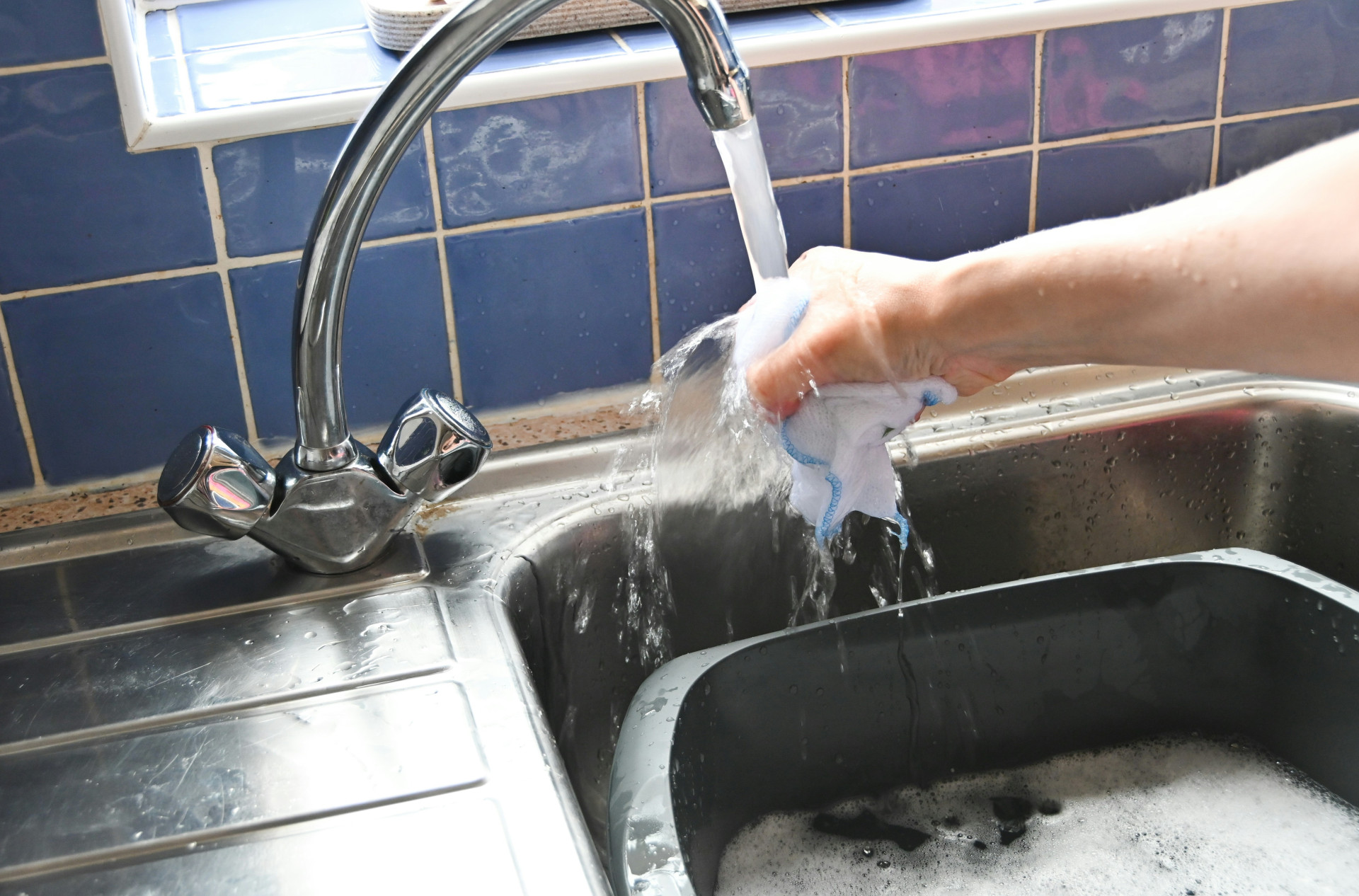
- For handwashing: Fill one sink with soapy water and another with clean rinse water. It’s far more efficient than letting the tap run continuously.
Cleaning Without Waste
You can also save water while cleaning your kitchen with a few easy tricks:
- Use a bucket instead of running water. When wiping down surfaces, a bucket of soapy water is all you need – no need to rinse your cloth under the tap each time.
- Wipe spills straight away. This prevents stains from drying and saves you from using large amounts of water later.
- Choose eco-friendly cleaning products. They often require less rinsing and are kinder to the water system.
Small Investments That Make a Big Difference
A few simple upgrades can help you reduce water use even further:
- Tap aerators and water-saving fittings. An aerator mixes air into the water stream, giving you the same pressure with less water. They’re inexpensive and easy to fit.
- Thermostatic mixer taps. These help you find the right temperature quickly, so you don’t waste water while adjusting.
- Fix drips and leaks. A dripping tap can waste hundreds of litres a year. Replace the washer or call a plumber to sort it out.
Make It a Habit
Saving water is mostly about changing habits. Once you become aware of where water is wasted, it’s easy to adjust your behaviour. Get everyone in your household involved – perhaps with small reminders by the sink or a friendly challenge to see who can save the most.
Even small steps add up. If every household in the UK reduced its daily water use by just 10 litres, it would save millions of litres each year. It’s a simple effort that benefits both the planet and your wallet – and it starts right where you are: in the kitchen.