Softer Spaces: Use Plants to Soften Hard Surfaces

Softer Spaces: Use Plants to Soften Hard Surfaces
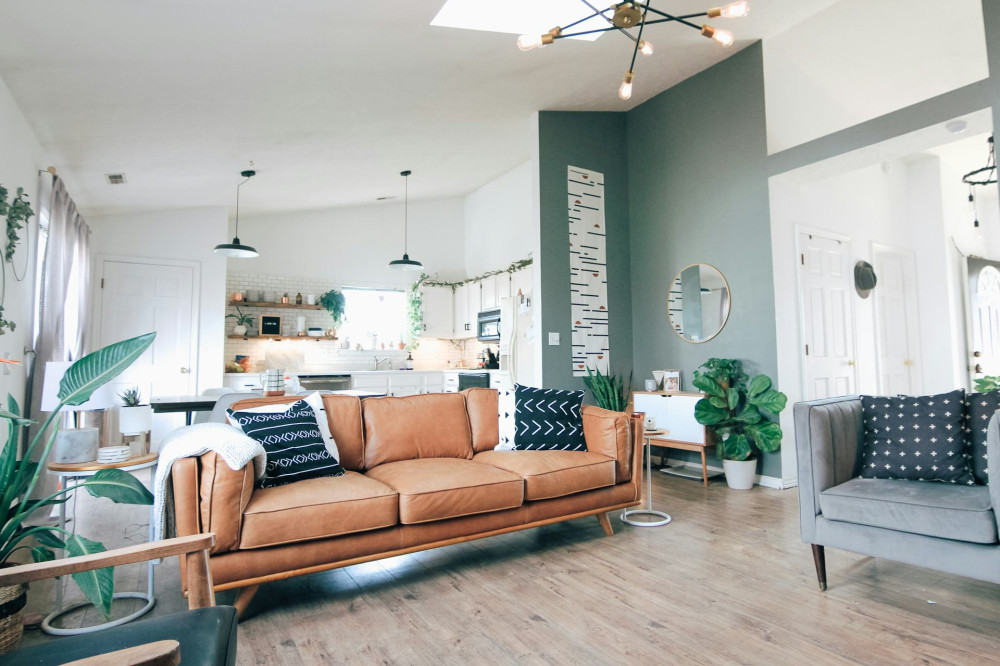
Modern British homes often feature sleek finishes, open-plan layouts and large windows. The result is bright and stylish – but sometimes also echoey and a little cold. Plants can be the perfect antidote. They bring life, colour and texture, while also helping to absorb sound and create a calmer atmosphere. Here’s how you can use greenery to soften hard surfaces and make your home feel more inviting.
Why plants make a difference
Plants naturally absorb and diffuse sound. Their leaves, stems and soil break up sound waves, preventing them from bouncing sharply off walls, floors and ceilings. That’s why rooms filled with plants often feel quieter and more comfortable to be in.
They also add visual softness. The organic shapes and varied textures of plants contrast beautifully with the straight lines and hard edges of modern interiors. Beyond aesthetics, this has a real impact on wellbeing. Studies have shown that being surrounded by greenery can reduce stress and improve focus – something we could all use a little more of in our daily lives.
Choose plants with volume and texture
If your goal is to soften hard surfaces, go for plants with generous foliage or dense growth. These act as natural “sound panels”, helping to diffuse noise and add depth to your space.
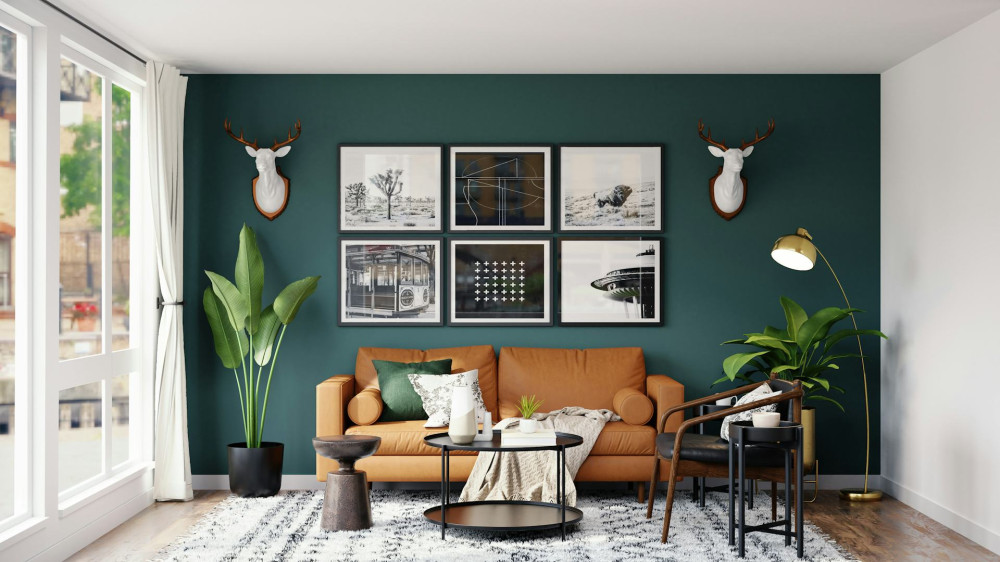
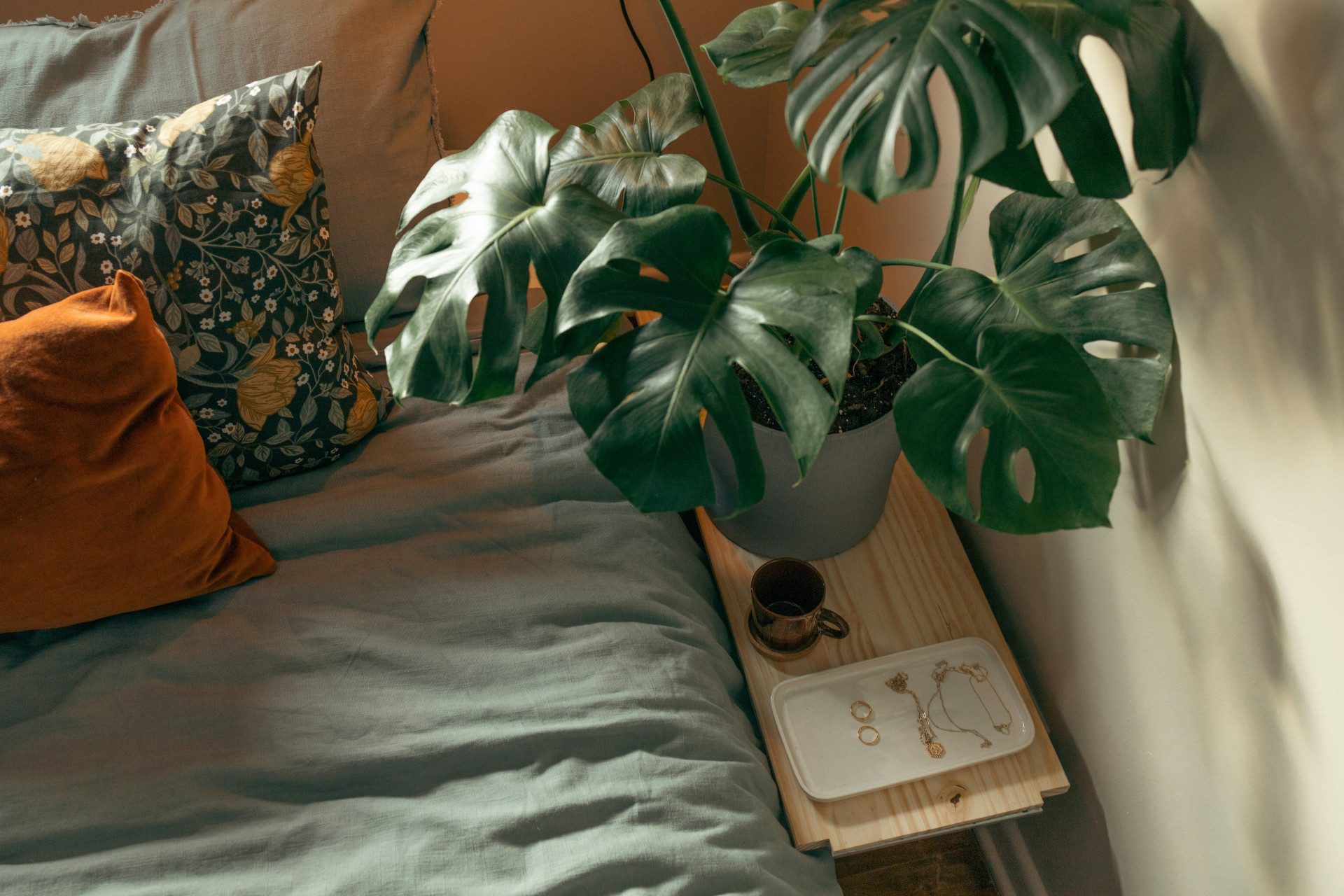
- Monstera deliciosa (Swiss cheese plant) – with its large, sculptural leaves, it’s both striking and effective at breaking up sound.
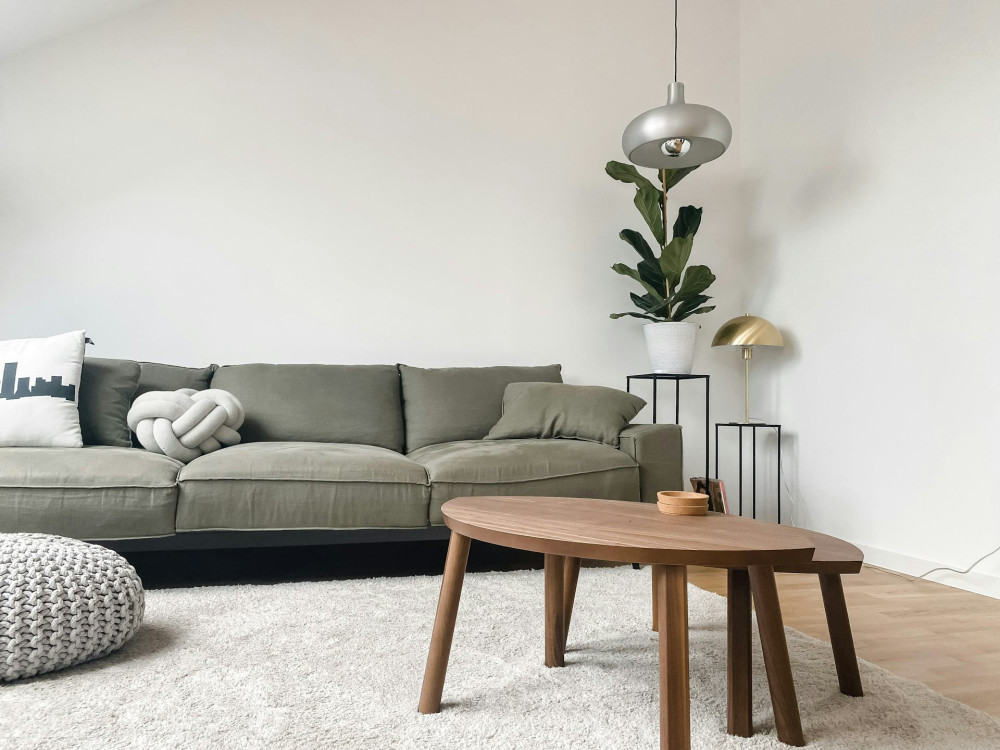
- Ficus lyrata (fiddle-leaf fig) – tall and lush, perfect for corners where sound tends to gather.
- Ferns – their feathery fronds create a soft, layered texture that helps to absorb both sound and light reflections.
- Sansevieria (snake plant) – hardy and low-maintenance, with upright leaves that add structure and contrast.
Mix different types and heights to create a natural, layered look. The variation in shape and texture will make your space feel more dynamic and alive.
Placement matters
To get the most from your plants, think carefully about where you place them. Large plants work best in corners, where sound often builds up. Hanging plants can help break up sound higher in the room, while smaller pots on shelves and tables help scatter sound more evenly.
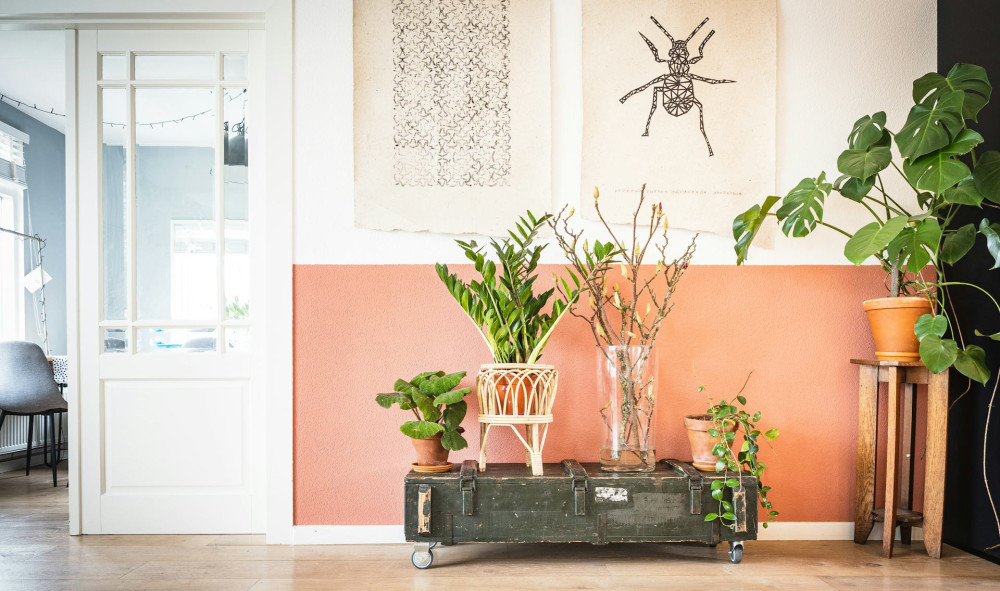
Positioning plants near hard surfaces – such as glass doors, bare walls or concrete – can also make a big difference. They act as green buffers, softening both sound and light.
Green walls and plant shelves
If you want to take things further, consider creating a living wall. Whether you use a ready-made system or simply group plants closely on a shelving unit, a green wall acts as a natural sound absorber and a stunning focal point.
Alternatively, floating shelves with trailing plants can break up large wall areas and add depth. It’s a flexible solution that works well in both small flats and larger homes.
Combine with other soft materials
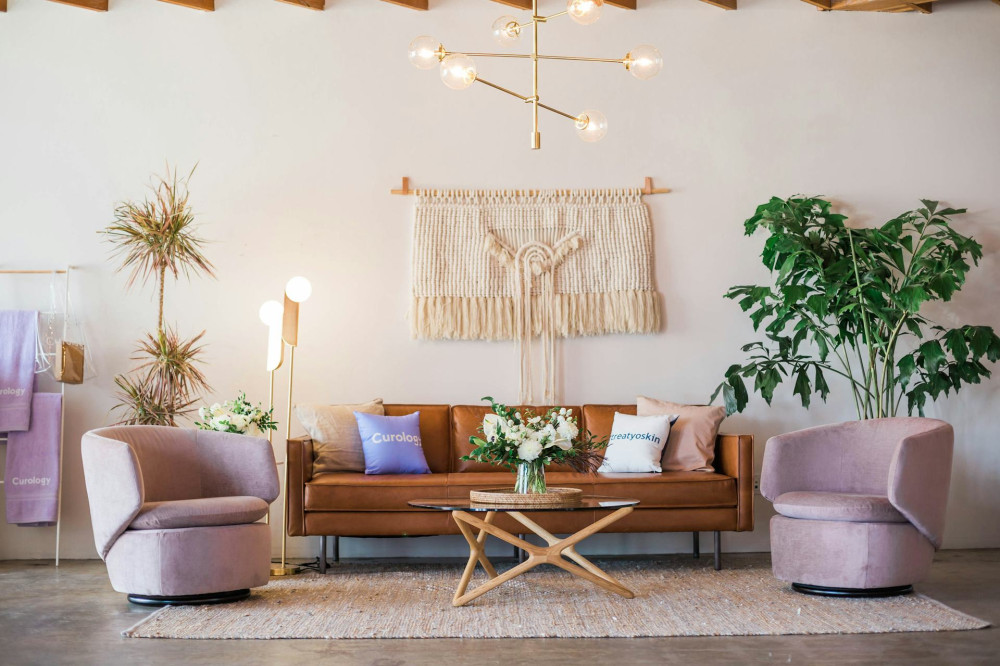
Plants do a lot, but they work best alongside other soft furnishings. Rugs, curtains and textiles help reduce echo, while plants bring life and variation. Together, they create a balanced space where both sound and style feel harmonious.
A room with greenery, natural materials and gentle lighting instantly feels calmer and more welcoming – without losing its modern edge.
A living home with better acoustics
Using plants as part of your interior design isn’t just about decoration. It’s about creating balance – between hard and soft, functional and sensory. Whether you live in a city flat with concrete walls or a house with large glass panels, plants can be the key to a more harmonious home.
Start with a few large green plants and notice the difference. You’ll soon find they don’t just change how your home looks – they change how it feels.