Smart heating and ventilation: Optimise your home with sensors

Smart heating and ventilation: Optimise your home with sensors
A modern home is about more than comfort – it’s about efficiency. With smart sensors for heating and ventilation, you can create an indoor climate that automatically adapts to your needs while saving energy and money. This technology is no longer reserved for new builds or tech enthusiasts – it’s now accessible to anyone who wants a smarter, more sustainable home.
What do the sensors do?
Sensors act as the senses of your home. They measure temperature, humidity, CO₂ levels and occupancy in each room. These data points are used to automatically regulate heating and ventilation, ensuring you never waste energy or compromise on comfort.
- Temperature sensors make sure the heating only runs when needed.
- Motion sensors detect whether a room is in use and can lower the temperature when you’re away.
- Air quality sensors monitor CO₂ and humidity levels and can activate ventilation when the air becomes stale.
The result is a home that responds intelligently to your habits and surroundings – without you having to lift a finger.
Læs også:

The benefits of a smart system
Investing in smart heating and ventilation sensors isn’t just about technology – it’s about creating a healthier, more economical home.
- Lower energy consumption – The system adjusts automatically, so you avoid heating empty rooms or ventilating unnecessarily.
- Improved indoor air quality – Continuous monitoring ensures fresh air and reduces the risk of damp and mould.
- Greater comfort – The temperature remains stable, and you no longer need to make constant manual adjustments.
- Long-term savings – While installation requires an initial investment, it often pays for itself through reduced energy bills.
How to get started
You don’t need to replace your entire heating system to begin. Many sensors can be integrated into existing setups.
- Start with key rooms – typically the living room, bedroom and bathroom.
- Choose wireless sensors – they’re easy to install and rarely require drilling or rewiring.
- Combine with a smart thermostat – it acts as the brain of the system and can be controlled via an app or voice assistant.
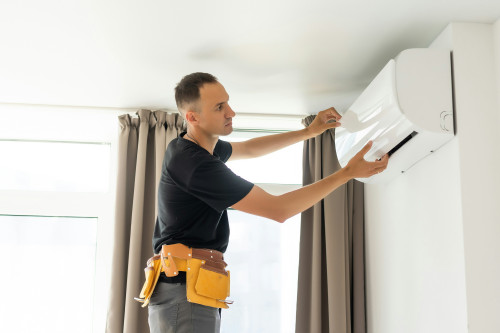
- Seek professional advice – especially if you have an older boiler or want to connect multiple systems.
In the UK, smart thermostats such as those compatible with gas boilers or heat pumps can help you meet energy efficiency goals and comply with modern building standards.
Integration with other smart solutions
Heating and ventilation sensors can easily become part of a wider smart home system. For example, you can connect them with:
- Window sensors that automatically turn off the heating when you open a window.
- Smart blinds or shading, which adjust according to sunlight to prevent overheating.
- Energy management tools that give you real-time insight into your energy use.
This way, your home becomes not only more comfortable but also more intelligent and environmentally friendly.
The self-regulating home of the future
Technology is advancing rapidly. New sensors are becoming smaller, more accurate and more affordable. In the near future, most homes will have systems that learn your routines and adjust automatically – without you having to intervene.
That doesn’t mean technology takes over, but rather that it supports you in living more comfortably and sustainably. A home that thinks for itself is no longer a futuristic dream – it’s a reality you can embrace today.
Læs også: